Connected by the Sea
“My food has no nationality.”
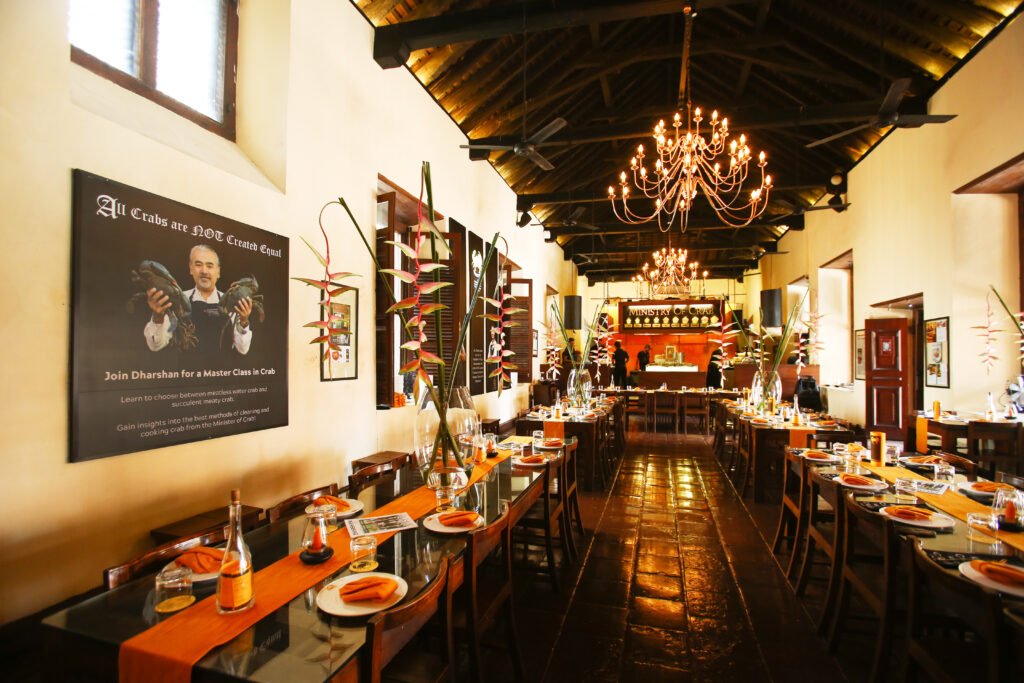
In Colombo, Monday evenings are usually a comparatively quiet affair as the work week kicks off. At the Ministry of Crab, the opposite is true. The restaurant nestled in the Dutch Hospital is organised chaos, servers weaving between bustling tables, bearing massive plates with massive crabs. Those who just got there are laughing and joking with each other, but the tables with food on them are notably silent as conversation is put on hold to dig in.
Nicky Wilson, a special envoy from Ghana, is sitting at one of the tables with his friend. He has a 17-hour layover in Sri Lanka on his way back home from the Maldives, and on recommendation from another friend, decides to indulge in a meal. He is unimpressed.
“It’s too industrialised,” he tells me while waiting for his food. “Too fancy. I want to experience Sri Lankan culture, be at the roadside, not in a fancy place.”
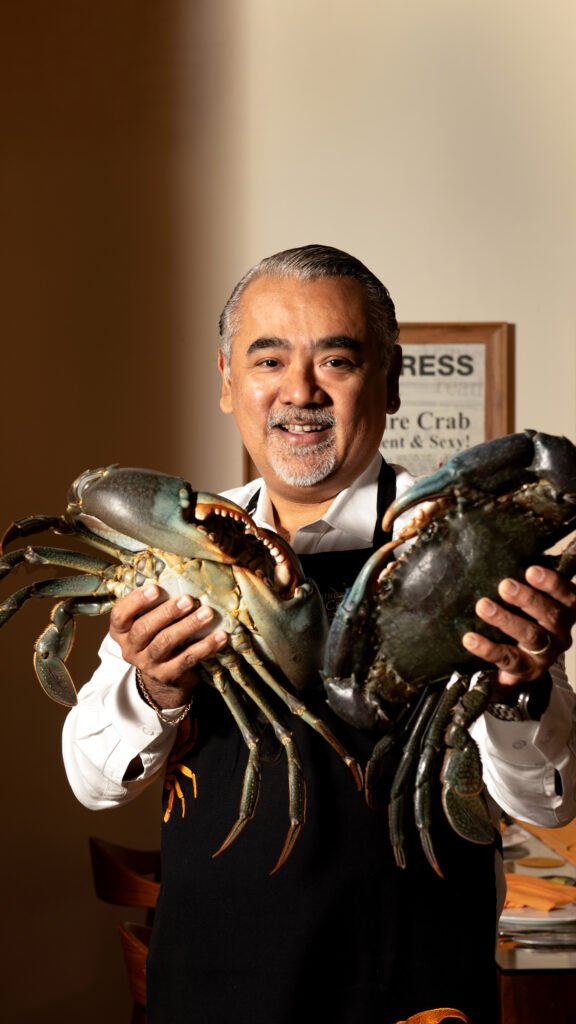
As he speaks, his food is delivered to him – a large mud crab, an intimidating-looking culinary challenge. To tackle the challenge, the table comes with crab cutters, but everyone expects things to get messy, so a bib and napkin are present as well.
20 minutes later he flags me down again. This time, his expression is one of begrudging respect. “I still think it’s too industrialized,” he says. “But I also want to give a review. This is the freshest and tastiest crab I’ve ever had, and I’m flying back after a week in the Maldives.”
The freshness is, in fact, carefully curated. The Ministry of Crab adheres to a strict no-freezer policy – they don’t buy frozen seafood, and they don’t freeze what they buy. The crabs are sourced daily and are wild-caught.
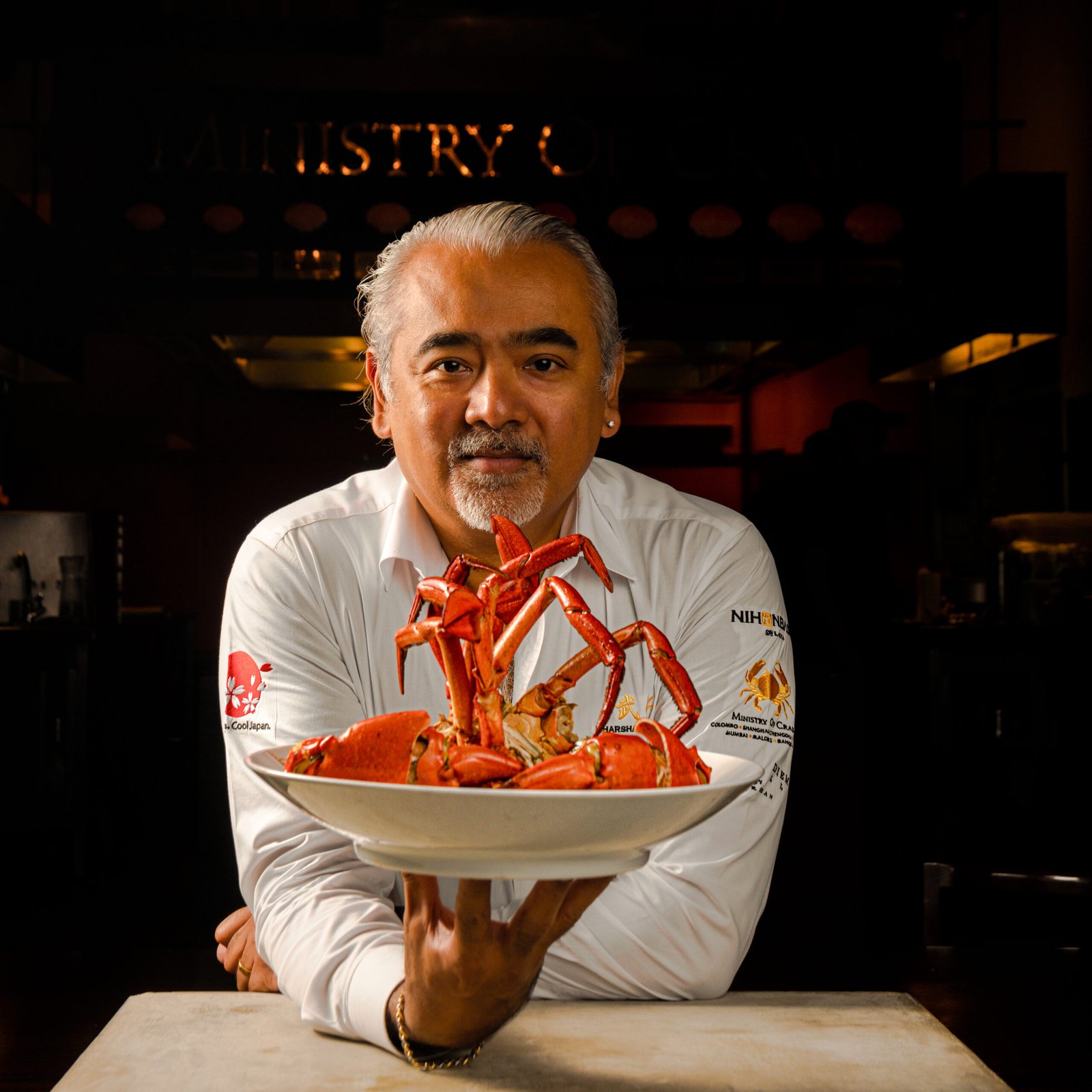
The man behind the philosophy, Chef Dharshan Munidasa, hails from both Sri Lankan and Japanese ancestry, and believes in learning from one to elevate the other.
There are many things in common between the two nations. “We’re both islands, both our coastal areas are fishing villages,” he says. “And we both use a lot of harvest from the ocean.” But that’s where the similarities end. “What is different is that Japan pays more attention to natural resources than Sri Lanka does.”
“Unfortunately, we’ve taken things for granted,” says Chef Munidasa.
Japan’s global reputation for fresh seafood is unmatched, with its cuisine relying on freshness for dishes like sushi. Chef Munidasa, having absorbed cooking from everyone around him, including his family, particularly his aunt and his grandmother in Japan, is well-versed in the reverence Japan gives to its seafood.
“Every fish there is, by name, by taste, by season, more respected.”
He believes Sri Lanka needs to respect what we have more. While in Japan tuna differs in fattiness according to whether it was caught in the North or South, “you go anywhere in Sri Lanka, you eat maalu. It could be loola, or thora, or mora, it could be anything, it’s still maalu.”
There is a fine line between a nation’s cuisine being elevated or distorted via another nation’s influence, but Chef Munidasa doesn’t see that happening at the Ministry of Crab. “[The preservation techniques] do affect the dish, positively, but the ingredients and the cooking is all Sri Lankan.”
What makes a dish ‘Sri Lankan’ is tricky. “First of all, I believe the ingredients should come from Sri Lanka,” says Chef Munidasa. He’s a big advocate of Sri Lankan ingredients – the Ministry of Crab does not import any of its major ingredients in a bid to champion local ingredients.
A Japanese journalist who visited last year had been amazed. “We never thought Sri Lanka had ingredients,” he had told Chef Munidasa. “We only knew that Sri Lanka had gems, tea, and Buddhism.”
But a dish does not become a cultural cuisine solely on the basis of the ingredients used. “If you use Australian beef and make a beef curry, is that Sri Lankan cuisine? Yes.” The chef indulges in beef tongue from Australia once in a while, making a curry out of it with Sri Lankan spices.
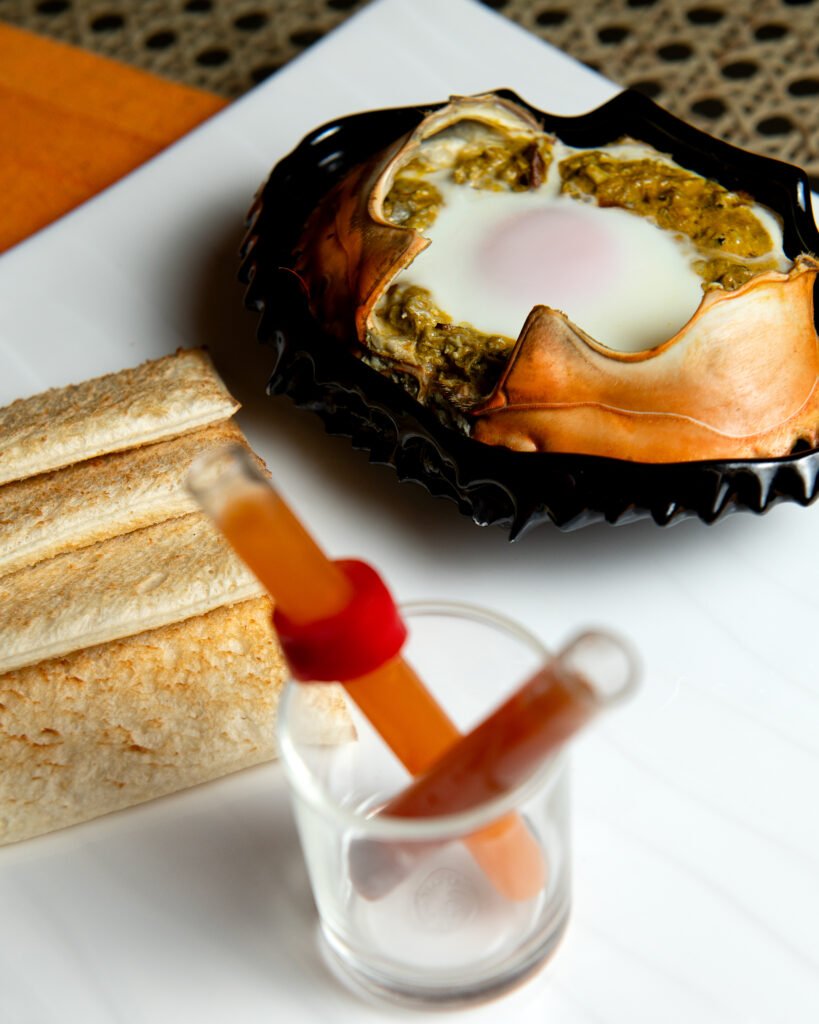
For Munidasa, it boils down to what he calls the DNA of the dish – certain dishes are only fully appreciated by members of a particular culture. That is the culture the dish belongs to, he says. “At our outpost in Singapore, there is one dish that has only two ingredients. We take the crab shell and whatever meat that is left there after steaming, chop it up, and steam it again with an egg. I call it Kani Tama. Kani means crab. Tama means egg.”
“And normally in Japan, it’s a crab omelette. So, this is already a play on words. Only a Japanese person will understand this dish.” He had served the dish to a Japanese person the week before. “I placed it in front of them. They didn’t know what it was because they had never seen it before. I told them the name. They got the joke.”
“And then they ate the whole thing like ‘wow, this is so amazing.’ Now, that is what I mean by DNA of the dish. You need to be of that culture to appreciate it.”
“It’s like religion,” he says. “It’s ultimately dictated by community, culture, history, tradition, and diet.”
Chef Munidasa credits his ability to walk the fine line to his lack of formal training, which would’ve placed his mind in a box, he believes. He also notes that in formal training, certain cuisines are strictly relegated, while his own is not so.
“Ministry of Crab is the kind of crab restaurant that pairs wines and crabs together. My food has no nationality. It’s not Japanese food, it’s not Sri Lankan food, it’s not Italian food, it’s not Chinese food. It’s absolutely unique.”
His staff agrees. Many of them have trained at the Ministry of Crab. Roshan Sampath (33), the sous chef, joined when he was just 18, and has worked here for the last 15 years.
“It’s very different from hotel culture,” he says. “We rely a lot on readymade food in hotels, but here it’s all fresh.” It has since changed the way he looks at Sri Lankan cuisine (he has a fresh appreciation of pol sambol now), and the way he deals with seafood.
Gihan Madusanka (37), who has worked at the Ministry of Crab for the last eight years, is even more affected. “Even when I go home for holidays now, I find myself trying to emulate the food here,” he says. “The taste of the food here is just that good.” The prawn curry has a lot more flavour than what they used to make at home.
The emphasis on quality when Madusanka joined has led him to be very conscious of freshness, even when he’s at home. “It’s definitely changed my relationship with food,” he says.
“When I started this restaurant, everyone challenged me saying it’s too expensive, you will fail,” says Chef Munidasa. “But now, some people tell me they make the reservation at MOC before they book their [flight] tickets. I am happy there are more people who want to eat my food. I consider it an honour and a privilege.”
Along the coast, fishermen bring in their daily catch each morning. The grading of crabs is simple: the best are exported to Singapore, while the lower grades remain on the island. Unlike Japan, where the finest seafood is valued and retained for local consumption, Sri Lanka has yet to adopt the same approach. At the Ministry of Crab, Munidasa makes a point of serving the very best of the island’s catch. But as he reflects on the country’s wider approach to its seafood resources, he says, “We haven’t kept the best for us.”
Perhaps it’s time we should.