
By Rooted
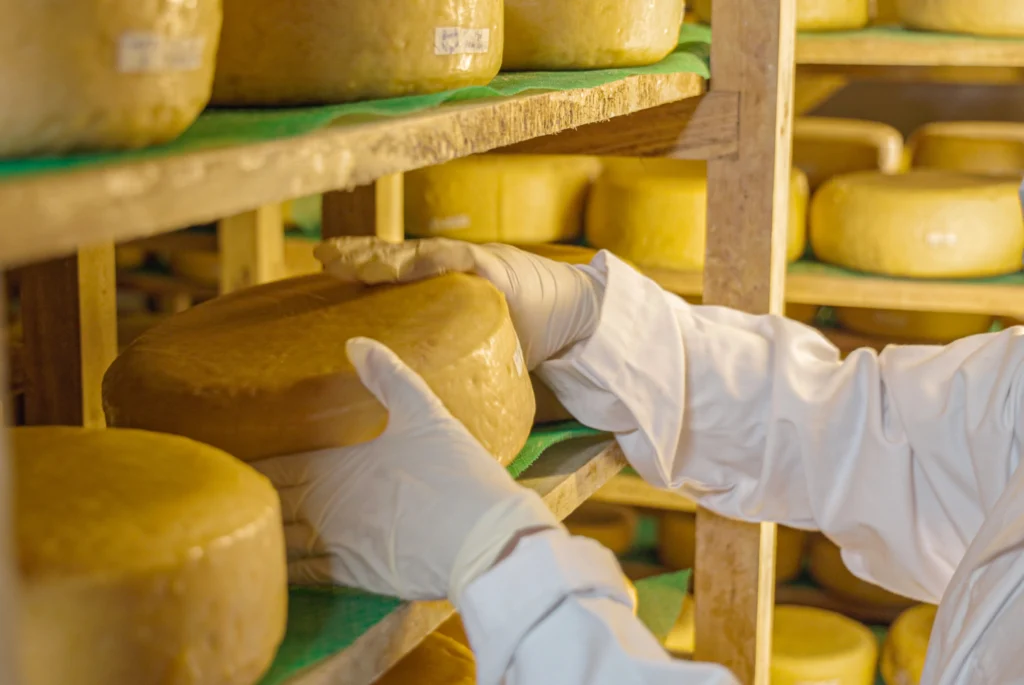
In a cold room in the hill town of Ambewela, milk is quietly becoming something else. It sits warm in a steel vat while a maker leans over it, waiting for the moment the curd decides to set. Outside, the afternoon is thick with heat. Inside, against everything the climate wants, a wheel of cheese is being coaxed into the world by hand. It is the unlikeliest of crafts to have found a home on this island, and yet here it is, taking root.
For many Sri Lankans, cheese began with a triangle and a smiling brown cow. Happy Cow and Kraft Cheese was the introduction to cheese, long before locally made Gouda and Burrata became part of the conversation. Whether it came in the form of a foil-wrapped triangle or a processed slice melted onto toast, it was something that came to us rather than something we made ourselves.
We were never a cheese country. For most of our history, the closest we came was buffalo curd, set in a clay pot and eaten with treacle, which is its own small marvel but a world away from an aged wheel of Gouda. Solid cheese was never ours to begin with. It probably arrived with the European colonisers, carried down the long sea route because hard cheese kept well on the water, and it is said the first cheese actually made here came from the bungalow kitchens of the hill country, by colonial wives working with milk from the plantations. For a long while, it remained a borrowed thing.
Today, a small but growing number of Sri Lankan makers are choosing to make cheese here. They are taking a craft long rooted in the cooler climates of Europe, more readily found in cold barns and slow grey afternoons, and making it work on an island of heat, humidity and monsoon. Their stories tell us not only how cheese is made in Sri Lanka, but how it is slowly becoming part of the island’s own table.
The man who was making it all along
Before Sri Lanka’s growing community of artisan cheesemakers began to take shape, Kumara Rathna was already making Gouda by hand in Ambewela, a craft he learned during a farm scholarship in the Netherlands before returning home in 1978. When a group of Dutch dairy experts arrived at Ambewela two years later, they discovered that one of the local men already knew how to make cheese.
What followed was the slow, stubborn work that every maker here has since repeated in their own way. He carried wheels to Nuwara Eliya and sold them to the hotels; orders came back by telegram. What began with 10 litres of milk and a kilogram of hand-made Gouda would eventually grow into the cheese operation that supplied hotels across the island.
Ciao and the man who fell for the island
If the early chapter was a man and a telegram, the new one begins with a phone ringing, an email, an order placed straight off a website. Nicolas Polet, Ciao’s founder, came to Sri Lanka in 2001 and never quite found a reason to leave.
Originally from Belgium, cheese was a hobby long before it was a livelihood. Having made cheese in Pakistan before coming to Sri Lanka, he already knew the hard truth that tropical milk behaves nothing like European milk and had to be coaxed differently.
He started Ciao in 2015 from very nearly nothing, in a garage, turning out perhaps three kilos of cheese a batch if he was lucky. Less than a decade later, those modest batches have become 30 tonnes of cheese a month, supplying everyone from boutique kitchens to some of the island’s finest hotels.
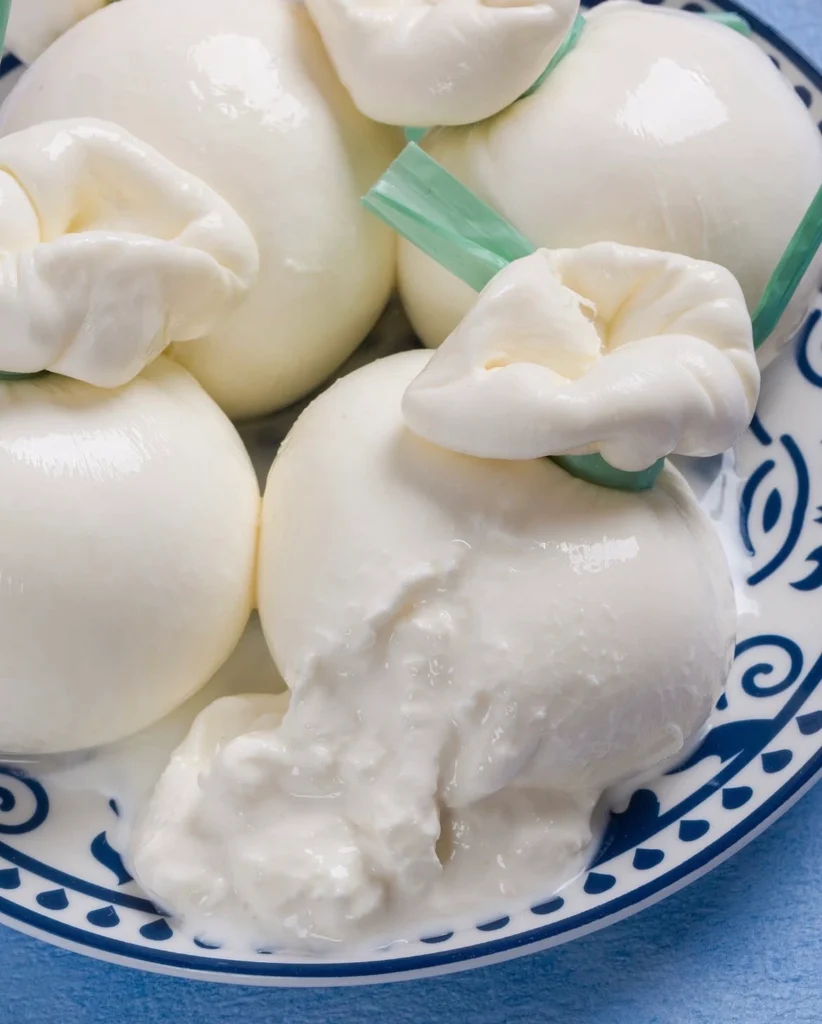
One of Ciao’s most popular cheeses is its Burrata, eaten simply with basil, tomato, a drizzle of olive oil and balsamic. Nicolas calls it the ‘queen of fresh cheeses’, a cheese he’s drawn to precisely because of how challenging it is to make.
“You have only the smallest window to make it, the pH has to fall just so, and yet, done right, it is a beautiful thing”. When asked what excites him most now, Nicolas hinted at what comes next. Bichon, a goat’s cheese, is nearing completion, to be followed by a curried Gouda studded with pumpkin seeds, its curd infused with Sri Lankan spices.
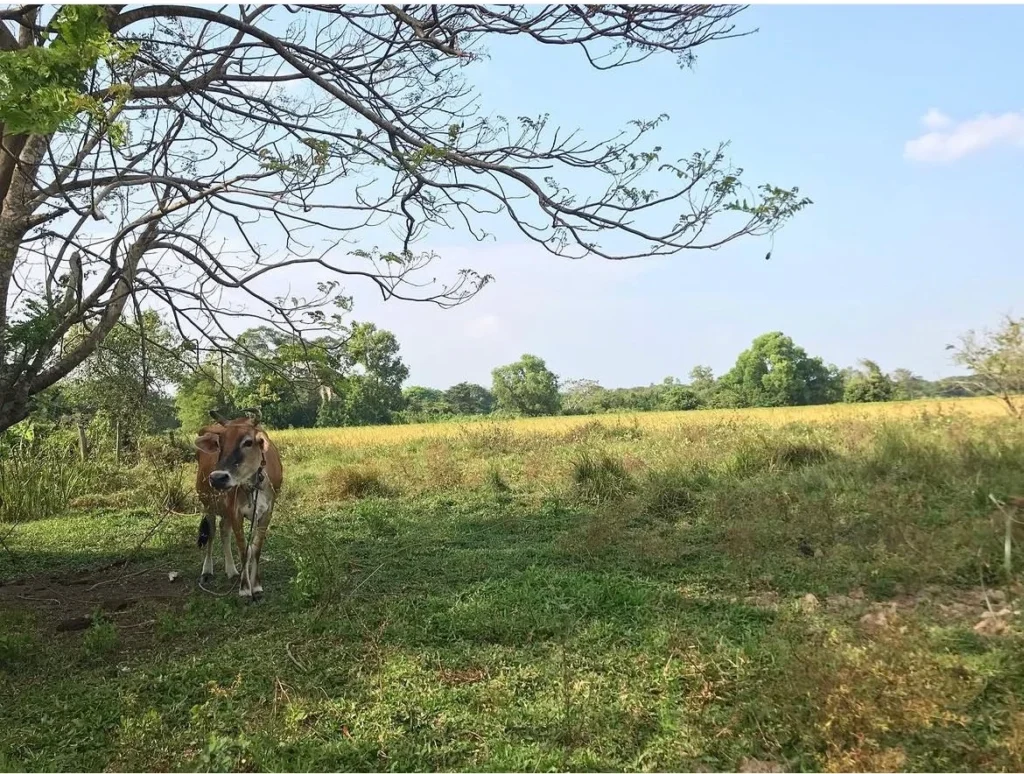
The hardest part of the whole trade, Nicolas says, is consistency. Sri Lankan milk refuses to behave the same way twice, changing with the cow, seasons, weather and the grass underfoot. He said this not as a complaint but with a certain fondness and it led us somewhere unexpected. To sell milk abroad, the rules are rigid: a farm must hit a certain yield, the cows reared a certain way, the right vaccines given, the boxes ticked. But here, you see cows grazing open pasture, calves at play beside their mothers, animals living freely. If the price of all that ease is a smaller yield, then that is not a bad thing after all. Nicolas has localised everything he can. “No, Ciao is a truly Sri Lankan product; it is ours”, he says and he means it. He keeps close ties with the farmers and the suppliers who make the work possible. As the conversation draws to a close, he offers one final thought: “This company isn’t about me, it’s about my team.”
MA’s, by the long road north
Some makers arrive at cheese by a much longer route. MA’s began in 1985, in rural Dambulla, with a young couple running a backpackers’ lodge and a complaint they kept hearing from guests: they loved Sri Lankan curry but could not find the spices to cook it once they were home. That single observation became a business that would go on to introduce generations of Sri Lankans and overseas cooks to its ready-made spice mixes and curry pastes.
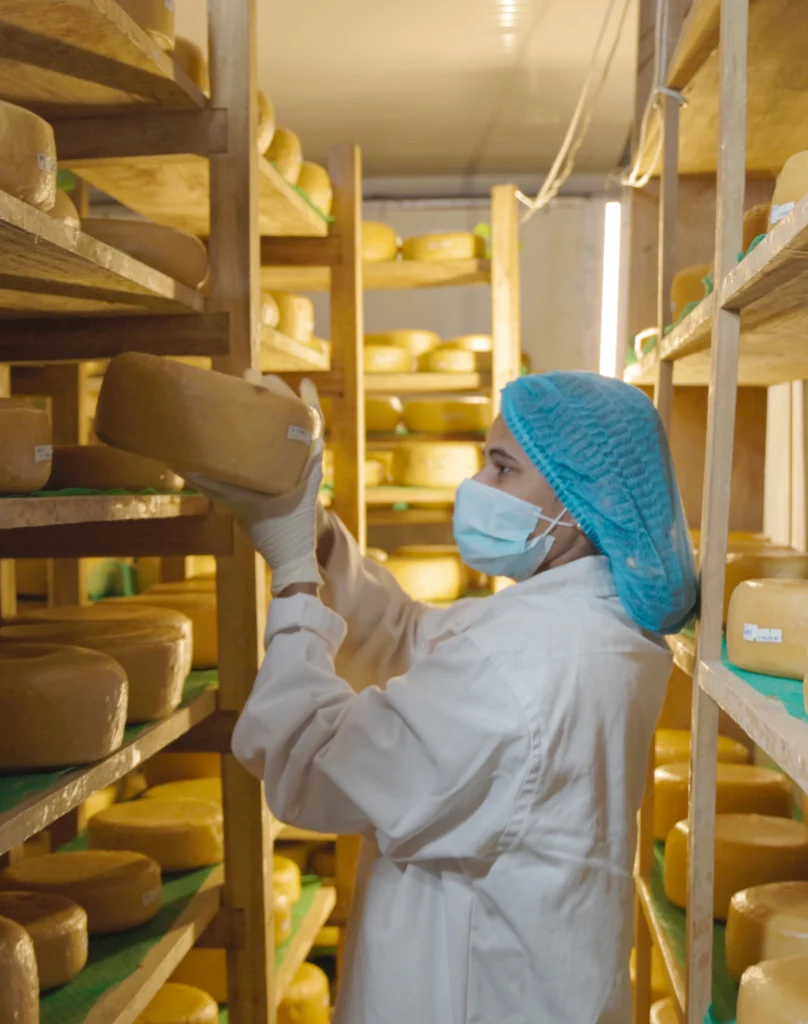
The cheese came much later and it came with a purpose. After the war, MA’s wanted to be part of mending the north, to put their hands to reconciliation through the plain work of making and providing food. In 2016, they breathed new life into a shuttered milk plant in Kilinochchi and then moved to Iyakkachchi, Palai and started making peanut butter and flavoured milk of their own. Dairy, though, was always the dream. Long-time lovers of Dutch cheeses, the founders saw in the North not only a place to make them but a chance to shape something new. So they did a wholesome thing. They turned to a Dutch programme in which retired cheese experts give their time to newcomers in the trade. Those cheesemakers helped MA’s establish their factory and develop the aged cheeses that would become their signature, particularly the Gouda. Speaking to Sheran De Alwis of MA’s Kitchen, it is clear that those Dutch influences still run through the company’s cheese-making philosophy today.
They learned what every maker here learns, that the milk of this region is its own creature, tasting of nothing they had met abroad. Their response was to learn and adapt. The cheeses were salted a little more generously to sit better on local palates while the aged cheeses such as their signature Edam were given more time, resting at least three months to develop its own distinct flavour.
The willingness to do things their own way appears everywhere else. Staff are housed and fed on site, a reflection of the founders’ belief that people should be cared for as carefully as the products they create.
And what they named the rest tells the whole story in a word. Elephant Pass Edam, Iyakkachchi Gouda, Old Palai strong, Paranthan firm: a board of cheeses named for the northern map itself. A cheese named for a town in the north is no longer a European thing wearing a local label. It is beginning to belong here.
And others still
They are not alone in it. Up in the foothills of Madipola, in Matale, Maia Cheese, founded by Georgian cheesemaker Maia Donadze, has spent years crafting cheeses from local milk, adding yet another voice to the island’s growing cheesemaking story. The makers are still few enough to count, and that somehow is part of the charm.
The weather, the milk, the matter of place
To make cheese here is to argue with the climate every single day. The heat and damp that would turn milk in an hour are exactly what an ageing room is built to defy, which is why every serious maker on this island, from Ambewela onward, has had to learn the same hard lessons about cold, time and patience.
Then there is the milk, and what the makers keep telling me about it. It will not hold still. It changes with the cow, the season and the grass, and a maker has to chase its mood rather than command it. There is something to love in that. And beneath it all sits the loveliest question of the lot. Does hill-country milk taste of the hills, the way wine is meant to taste of its slope? Is there a Sri Lankan terroir gathering in a wedge yet, or are these makers still inventing one, wheel by wheel?
Perhaps that question matters less than it once did.
What is clear is that a food which arrived on these shores from elsewhere has begun to put down roots of its own. A thing that did not belong to us, that came down the long sea route in a coloniser’s hold and then waited the better part of a century, is slowly and stubbornly learning to be ours. The milk is different, the climate more challenging and the palates it serves distinctly its own. Over time, the craft has adapted to all three. The result is not quite the cheese of Europe, nor is it something entirely new. It sits somewhere in between, shaped by local pastures, local tastes and the realities of the island itself.
Perhaps that is what belonging looks like.
We started with a foil triangle and a smiling cow. Today, we have burrata pulled fresh in Colombo and Gouda named for a town in the north. The makers are still few and far between. The cheeses are still finding their names. But the appetite is here, the milk is here, and the people willing to lean over the vat and wait are here too. The rest, you feel, is only a matter of time.