
By Zinara Rathnayake
In Galle Fort, the Moor recipes are a delicious lesson into the long, layered ancestry of its Muslim community
When I ask Aslam Anver to talk about his family’s history living in the three-century-old Galle Fort, he tells me tiny, unfinished stories: of Sri Lanka’s first Muslim college his great-great-grandmother established in 1892; of women who guarded their homes in the absence of men; of his mother’s family who ferried their way here from southern India’s Malabar coast; of revered recipes his grandmother and mother have kept within their family.
“Galle Fort has always been a bit matriarchal,” the 30-year-old Anver tells me, wearing a long-sleeved black linen shirt and a pair of round-rimmed glasses as we walk down the busy cobblestone streets on a scorching April evening. His great-great-grandmother’s college still stands here, teaching everything from mathematics to Islam and astrology, now managed by the family’s trust.
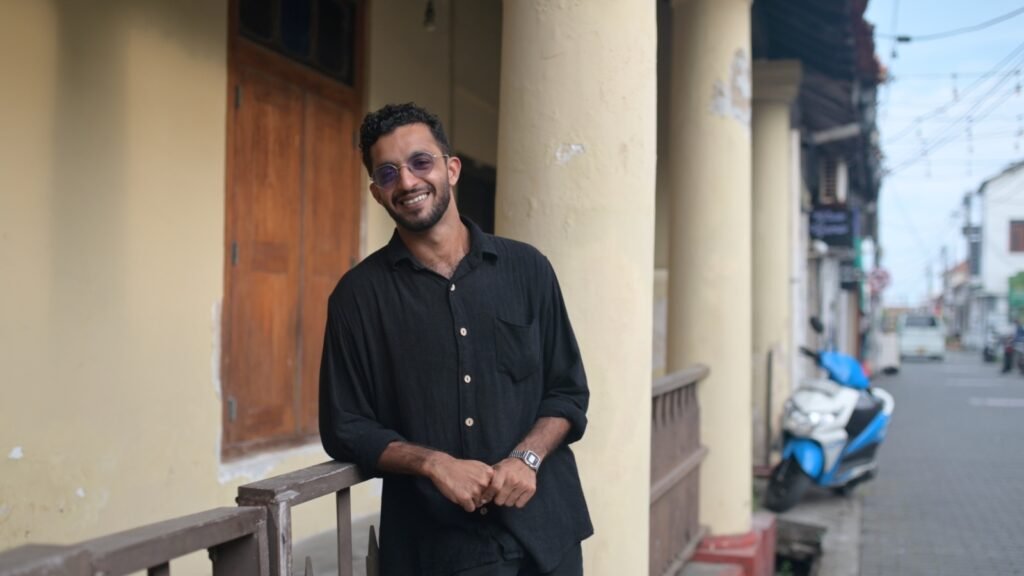
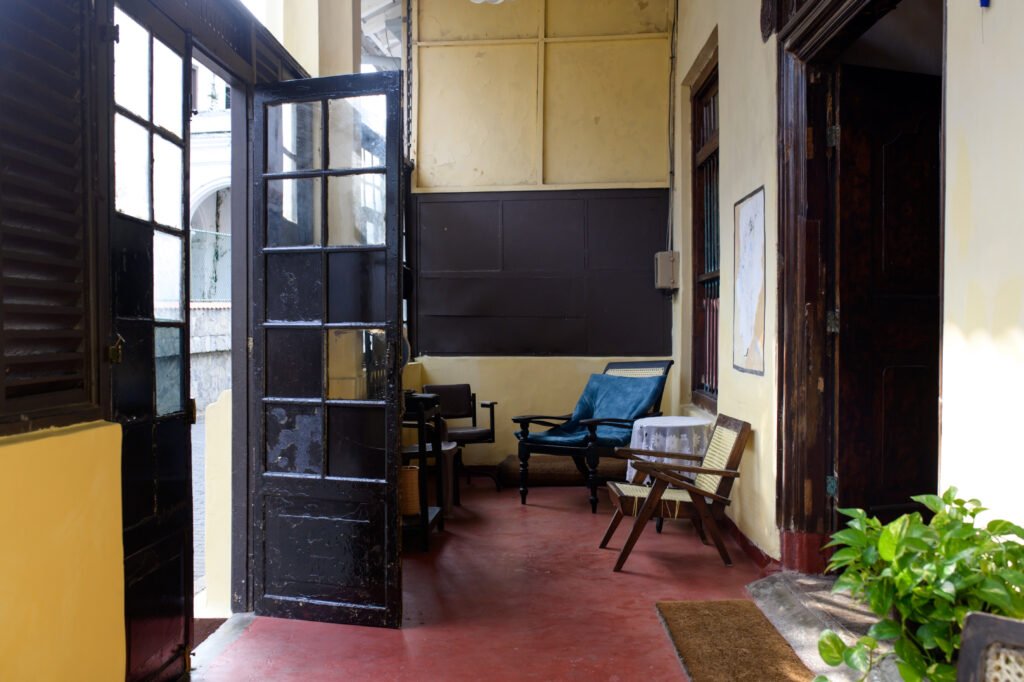
Walking back to his house within the fort, we find Anver’s father sitting quietly outside. The thick, plastered walls of the front porch, slowly ageing in the headiness of the salty ocean air, carry tales of colonisation, migration, and trade. The home is open, airy and lived-in, with parts old and new, where a framed wooden doorway leads to the large living area with earthy, red floors and lofty ceilings. Above the door sits an arched transom with ornate floral woodwork and partly fragmented glass panels fitted within carved scrollwork.
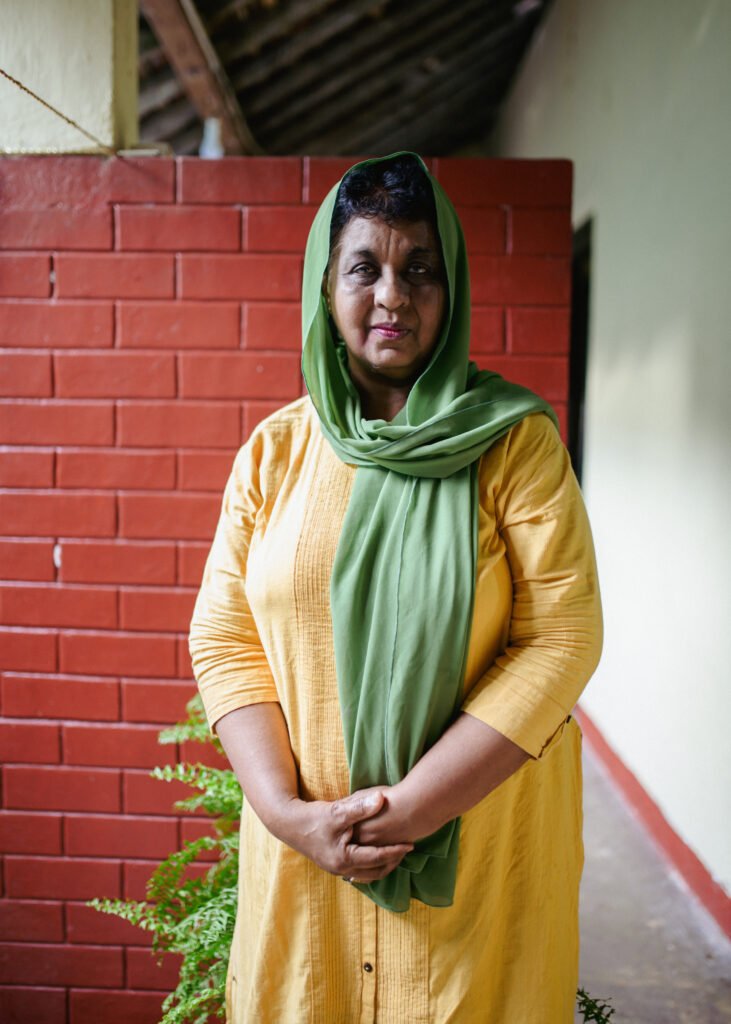
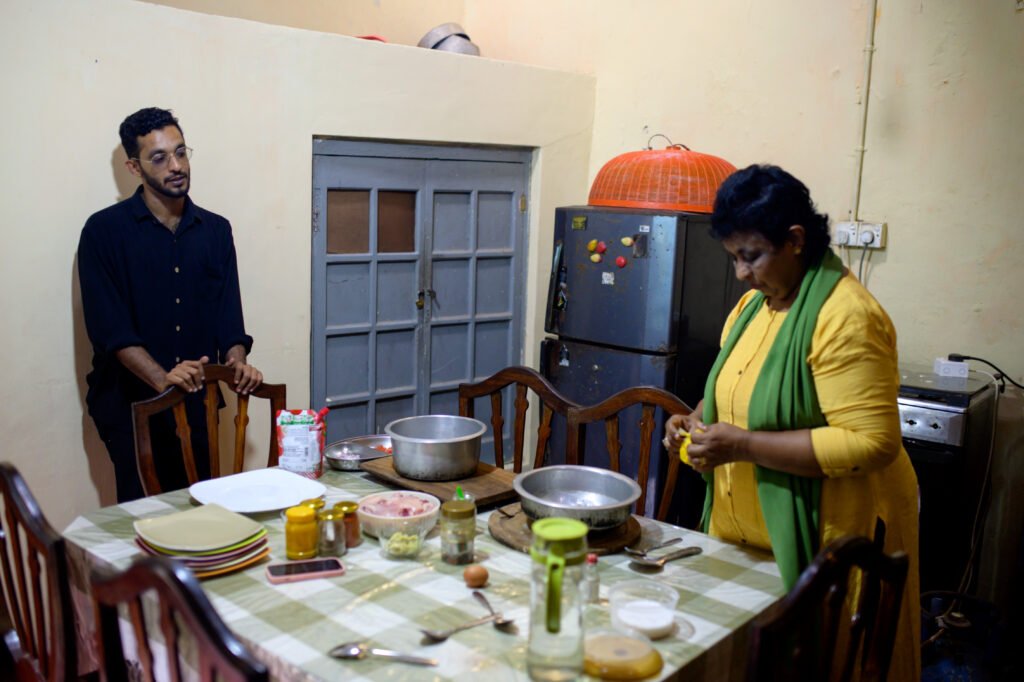
The living room narrows into a dining hall that adjoins the house’s bedrooms, and one of Anver’s cats naps in the evening’s warmth. Sun dapples through a narrow courtyard, and a couple of tiny rooms – all now part of the home’s kitchen – line a long corridor. It’s here we first meet Anver’s mother, wearing a yellow tunic, stuffing fresh cabbage leaves with coriander-flavoured, peppery rice and chicken, and fashioning them into little rolls called gova shoru for steaming. It’s a recipe that resembles stuffed grape vine leaves from Palestine to Syria, Turkey and Egypt.
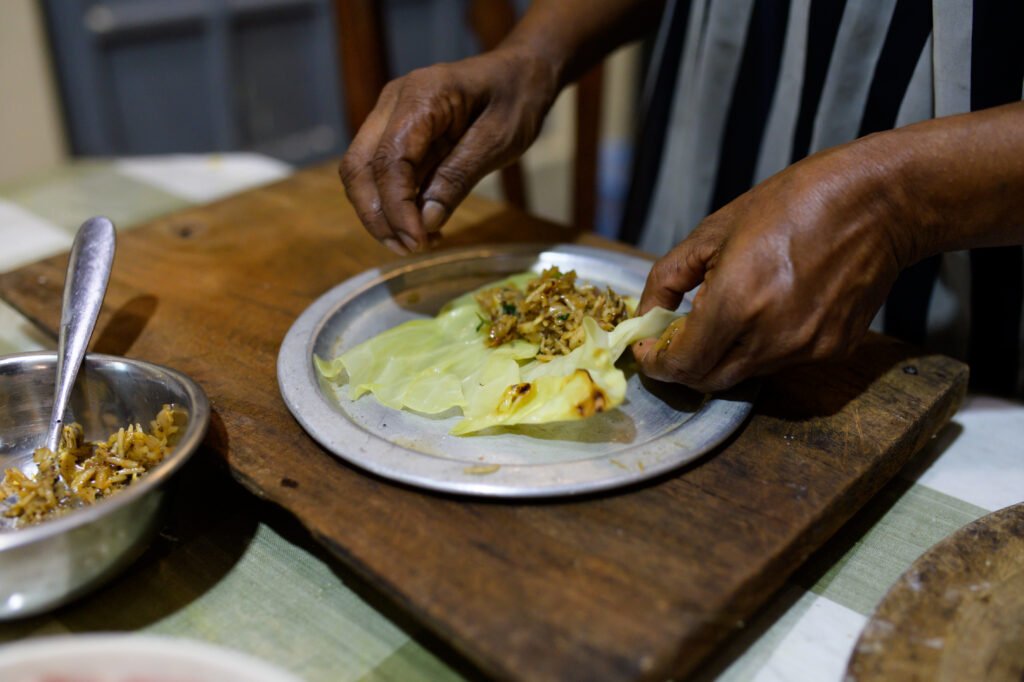
As a teenage girl growing up in Galle Fort, Fathin Anver learned her family’s recipes from her mother and grandmother, to replace vine leaves with cabbage that she could easily find at the local market. Hired cooks and helpers, all of whom are women, have become a part of the family now, cutting, slicing and chopping vegetables, and quietly observing and mimicking the recipes that have passed down from mother to daughter. The Anver family residence may hold the stories of their past, but the kitchen is a portal into a world both old and new – the creamy mixed meat-and-vegetable curries that change with season as charred skies bring monsoon rains; the semolina cakes Fathin learnt to prepare from her ancestors, that she now makes for her health-conscious children; the sweet thirst quenchers mixed with chunks of cut pineapple she instructs her cooks to prepare when guests come home.
Anver’s family has been living in the Fort for nine generations since the early 1800s. Before his part-jeweller, part-trader ancestors owned this home in 1875, it may well have been the residence of the Dutch governor of Ceylon (the old name colonial rulers used for Sri Lanka). Anver traces their family’s history back to several centuries. While his mother’s family arrived in Sri Lanka in the 17th century from South India, his paternal ancestors may have come from 15th-century Yemen.
In many ways, to know, taste and learn about the family’s recipes is to untie the stories of their past, and decode the long, complex, nuanced history of colonial Sri Lanka.
Flipping through the history books at school and wandering around the fort with historians, I’ve learnt that the Portuguese arrived here by accident while sailing from Goa to the Maldivian islands. Their fleet was blown off course by a storm and landed in Galle’s harbour in 1505. During the Portuguese rule of the island’s coastal belt for over 153 years, the locals, as well as Arab and Chinese traders who had settled down in Galle, were heavily persecuted.
Meanwhile, the Dutch, who had already established the Vereenigde Oostindische Compagnie (Dutch East India Company) in present-day Indonesia, looked for ways to control Sri Lanka’s lucrative cinnamon trade and formed an alliance with the king in Kandy. “When the Dutch colonised Sri Lanka [in the 17th century], they realised that they couldn’t hire locals for administrative purposes because the Portuguese had persecuted them so much that they [the local population] didn’t receive any education,” Anver says. They turned to their closest colonies, including Indonesia, from where they brought academics and soldiers. When the British gained control of Sri Lanka’s coast in 1796 and the entire island by 1815, they brought scholars from across India, from places like the tropics of the Malabar, where Anver’s family, too, comes from. His South Indian ancestors married into a Sri Lankan family. The island, to them, became their new home.
Under the British, Colombo became the hub for trade and administration, and people began selling their lands and houses in Galle before migrating to the new capital. Anver’s family, who had ventured into jewellery business in the early 18th century, acquired some of the properties, including the house they live in.
When the capital was finally moved to Colombo in 1815, men would typically take the long journey westward for commerce, and women remained home. “It became a quiet and spiritual society within the fort,” Anver says.
Around this time, sheikhs from the greater Arab world, from Egypt to Tunisia, Cyprus and Uzbekistan, would come to teach at the college established by Anver’s great-great-grandmother, living in their ancestral home for months and years. They would introduce their recipes to the family’s women, who would adopt and adapt them, with proteins, greens and herbs that are abundant in the tropics.
With many members of Anver’s extended family now living in Colombo and across the world, these recipes are still preserved and fashioned by the women who learnt to cook them from the women before them. “These are all made within our family,” Fathin says, dousing tomato ketchup over stuffed cabbage rolls. “If you go to my relatives’ houses, they will make something the same way, but maybe with their own little twists.”
Anver is now a hotelier by profession. With his brothers, he also guides visitors across the fort’s streets, ramparts and bastions and hosts tourists for tasting menus at home to share little stories of the family’s long history.
When Anver was growing up in Galle Fort, however, tourism was hardly a commercialised industry as it is today. It was a society centred on trust, connection and community, and as Anver puts it, “a magical place.” The families that lived in the fort at the time kept their doors and windows open, often blurring the lines between the world within and outside.
With tourism growing as a formal industry and Galle Fort being recognised as a UNESCO World Heritage Site in 1988, many locals have now moved out of the fort, and their ancestral homes were bought by wealthy foreigners and Sri Lankans from Colombo, who have turned them into tourism businesses. Most of those who still live here, too, have restored their homes into villas, hotels and boutiques. In the early 2000s, there were 400 families living in the fort. Today, it’s 70.
As tourism draws changes to the fort’s social fabric, it’s food that has always kept people connected and helped foster a sense of community among its residents. During religious and cultural gatherings, men, women and kids still come, cook, and feast together, and feed others. Giving food, Anver says, is “something that is blessed” for his family and the fort’s Muslims. “We love giving food. I learnt how to serve and work in the hospitality industry by hosting people at home,” he says.
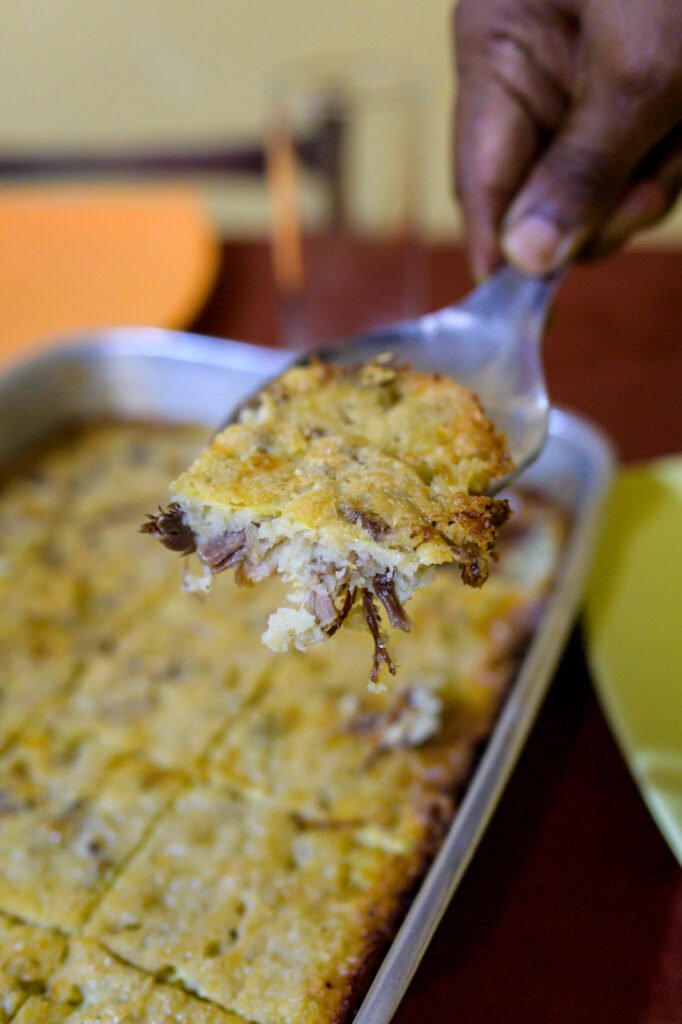
Today, Anver’s hosting us for late lunch at home. As we settle in, Fathin serves France appa, an oven-baked, soft, buttery semolina cake with a slightly charred, crusty bottom, made with beef and raisins, flavoured and scented with sweet cinnamon. It pairs well with a sweet, tangy and slightly spicy pineapple chutney Fathin had prepared by simmering diced fruit with sugar and spices. France appa was a recipe created by one of the family’s ancestors who worked as a chef on a European ship. Inspired by European baking traditions, he wanted to make something a little savoury. “These people like it [France appa] because it’s not [a lot of] carbs,” Fathin says, looking at Anver.
There’s also kozhi badam, a dry chicken dish with deep-fried almonds, potato, carrot and chickpeas, which Anver explains as “Ottoman-inspired.” Often made when families gather or during special occasions like weddings, it’s eaten with
roti (flatbread) brushed with golden ghee or string hopper biryani, which is biryani meat layered with idiyappam (soft, delicate and thin rice noodles pressed onto a mat and steamed). During Eid, a similar dish is prepared with turkey meat and fried nuts.
As we all dig into our second and third servings of France appa, Fathin and Anver both speak about how seasonality and convenience tempt the way they cook. “What is around us is what we eat,” Anver says.
When breadfruit is in season, they would slow cook it into del and mas, with beef and spinach in coconut oil. It’s eaten with rice and a handful of freshly grated coconut. Sometimes, karawala (sun-dried salty fish) replaces the cow’s meat. Aviyal – meaning ‘mixture’ – is made with sweet potato, pumpkin, spinach and dried fish simmered in coconut milk. The recipe was believed to be created by a woman “who couldn’t be bothered cooking different things” for her big family, Anver says. “So she put everything together [into one pot].”
Fresh catch from the ocean is a major part of the diet, too. The whole fish of seasonal, bottom feeders like ora malu – a type of mullet, according to Anver – are cooked with species, and eaten with hot rice and kankun (water spinach). Chunks of seer fish are also used for layering the fragrant biryani rice.
The family also prepares kaliya payar, two dishes that are served together with rice and mango chutney. Kaliya is prepared with smokey, browned ash plantain and aubergine, while payar is made with potato and mung beans. The expensive legume is now increasingly replaced by cheaper, imported masoor dal.
“Galle people know how to eat, and Colombo people know how to dress,” Anver’s grandmother would always tell him.
Perhaps, there’s some truth to it. When I brought this up with my friend Zahil Zain later, he agreed. Zain, who hails from Galle Fort but now lives in Colombo, says that everyone in the community believes that Galle locals are known for the food they cook. “People from Galle make good food, and they are always particular about what they eat,” he says, “even at a funeral home, they’ll want food that tastes good.”
Today, however, Anver’s generation of the family doesn’t know how to prepare the food his mother, grandmother and the matriarchs before them have done. Like with most South Asian cuisines, the food Fathin cooks is a result of years of long hours in the kitchen, throwing in a little of this and a little of that. It’s something deeply personal to each person behind the stove, to Fathin, to her mother, grandmother, aunts and her sisters.
In Fathin’s kitchen, the spices are never measured. Rather, it’s what she feels is right. But this also means that she fears the loss and erasure of her family’s rituals: the recipes born and evolved as a result of faith and migration, commerce, and colonisation, trade and travel; the meaty feasts that act as a thread between her family and the community; the sweet cocoa custard she made for Anver’s birthday, to take to school as a little treat for kids in his classroom although everyone else brought cake. It’s what made their home, as Anver describes it, “a pudding house.”
Change, however, is inevitable. And whether we like it or not, some of these recipes will be lost, some will be altered, others will be cooked, and shared and cherished as Fathin and the women before her have always done. To eat is to acknowledge the shared histories of our food cultures, but also to grasp the ways how we eat will change, to live through the painful realisation of knowing how our changing geographies and kitchen habits will refashion the food we grew up eating – perhaps, to never really recreate the aromas, textures and flavours of our childhood, of the food our mothers and grandmothers cooked for us.
As we wrap up our late lunch with a second serving of gova shoru, Fathin tells me that she still measures her cooking by heart, but her family is now working on a cookbook, finally, to write down the recipes that define them, and belong to them.
The food that makes them who they are.